

By: Dwi Saput
Geopolitical uncertainty and global energy market dynamics are challenges that Indonesia needs to anticipate. Conflicts in various regions can affect supply chains, distribution, and the movement of world oil prices. In such a situation, the government’s ability to maintain the availability of fuel oil (BBM) becomes important to provide certainty that the energy needs of the community can still be me
Minister of Energy and Mineral Resources (ESDM) Bahlil Lahadalia said the national fuel reserves were still at the minimum standard, which is around 18-21 days. The availability of these reserves is an important part of maintaining the national energy supply amid global dynamics that are still difficult t
Bahlil said the government paid special attention to the availability of energy as the world geopolitical situation develops. The government needs to ensure that fuel stocks remain available so that people’s needs are not disrupted if there are changes in the global energy sup
The government’s move in maintaining the adequacy of fuel reserves should be appreciated as a form of anticipation against the uncertainty of the global energy market. BBM still has a big role in supporting community mobility and economic activity. Supply disruptions can impact transportation, distribution of goods, industrial activities, and other productive activities. Therefore, ensuring the availability of stocks is an important part of maintaining national economic
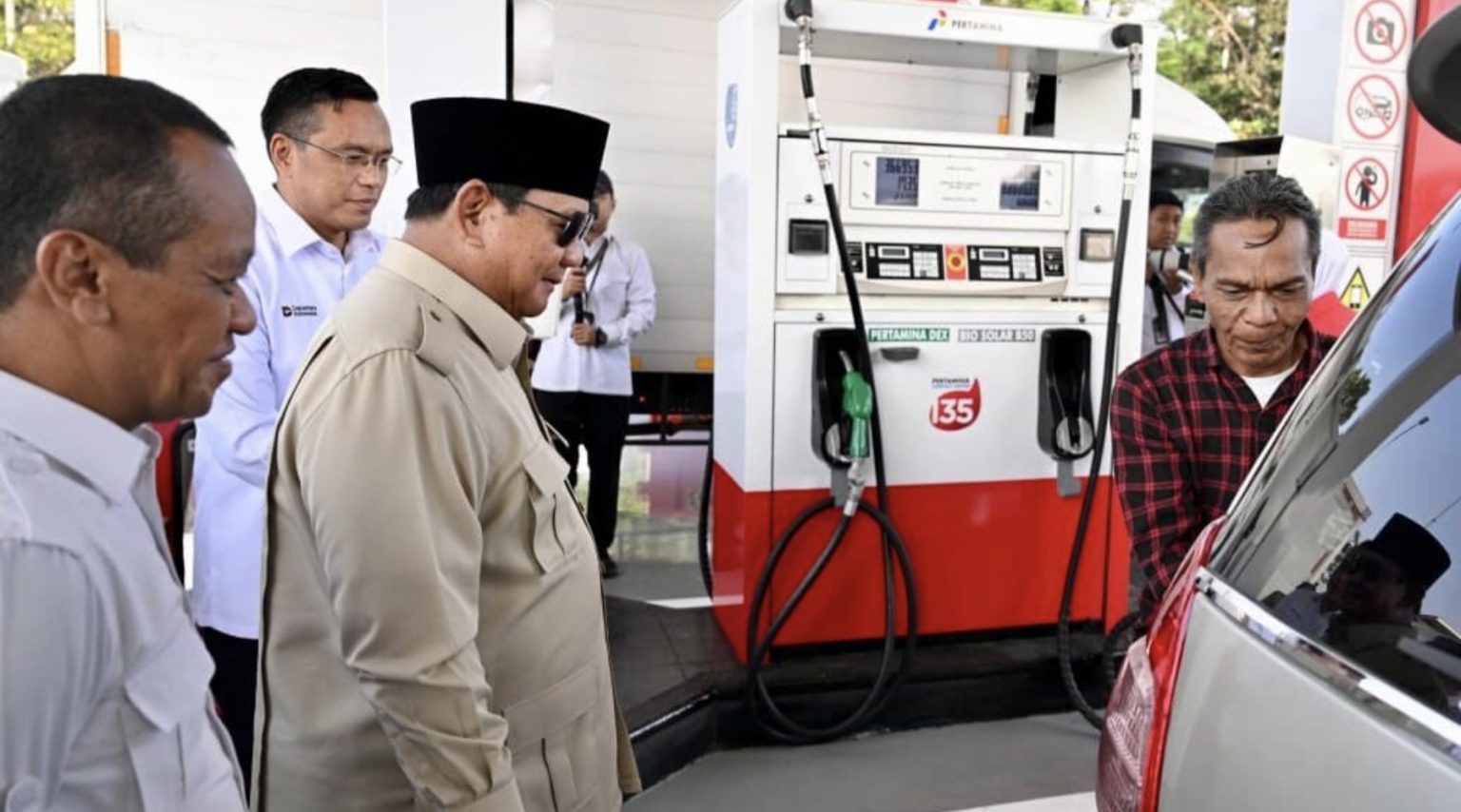
In addition to maintaining the availability of supplies, the government also provides certainty about the price of subsidized fuel. Coordinating Minister for Economic Affairs Airlangga Hartarto confirmed that subsidized fuel prices will not rise until the end of 2026. This certainty is a positive policy amid fluctuations in world energy prices because it can help people maintain spending while maintaining purchas
The stability of subsidized fuel prices also has a broader impact. Energy price changes can affect transportation and distribution costs, which then has the potential to impact the prices of various community needs. The government’s decision to maintain subsidized fuel prices until the end of the year is therefore worthy of appreciation as an effort to protect the public from the impact of global energy price v
However, the mechanism of non-subsidized fuel prices is different. Airlangga revealed that the price of non-subsidized fuel follows the development of world oil prices by referring to the Indonesian Crude Price (ICP) indicator. When ICP increases, the price of non-subsidized fuel can rise, while when ICP falls, the price can again undergo a c
The difference in these mechanisms shows that the public still needs to pay attention to the development of the global energy market. At the same time, the policy of maintaining subsidized fuel prices became a government instrument in providing protection to groups of people in need amid potential changes in ener
However, facing energy uncertainty is not enough just to maintain reserves and fuel prices. Strong energy resilience requires the ability to meet energy needs more independently. In the long term, the government also encourages increased oil and gas production, optimization of oil wells, and development of
The direction of the policy is a strategic step that needs to be continuously encouraged. Strengthening domestic production can reduce dependence on imports while strengthening Indonesia’s ability to deal with global supply disruptions. The greater the energy needs that can be met from within the country, the less vulnerable Indonesia is to changes in international market c
President Prabowo Subianto has previously also directed his ranks to prepare the development of 50 percent ethanol-blended gasoline or E50. The policy is part of an effort to reduce dependence on fuel imports while strengthening national energy
The development of ethanol-based fuels can be one option to expand the utilization of domestic energy sources. If implemented in a measurable way and supported by production readiness and infrastructure, the development of biofuels can help strengthen energy diversification while reducing dependence on import
The various government measures deserve appreciation because they show that strengthening energy security is done through short-term and long-term policies simultaneously. In the short term, the adequacy of reserves and the stability of subsidized fuel prices provide certainty for the community. In the long run, increasing domestic production and developing alternative energy will be the foundation for strengthening energy ind
The government is currently trying to maintain two main aspects, namely the availability of fuel and the stability of subsidized fuel prices. Meanwhile, non-subsidized fuel consumers still face the possibility of price changes along with the movement of world crude oil prices through the ICP
In the future, the government’s consistency in maintaining fuel reserves while strengthening energy production and diversification needs to be maintained. The effort is expected to provide certainty of supply for the community, maintain economic activity, and strengthen national energy independence. Supply certainty is also important to maintain the confidence of the public and business actors so that economic activity continues in the midst of global uncertainty. With increasingly strong energy resilience, Indonesia will have a better ability to deal with the turmoil of the global ener
)* Observer of socio
-economic issuesgy market.indicator.ependence.ed energy. security.onditions. biofuels.gy prices.orrection.olatility.ing power.stability.ply chain.o predict.t.ri
Oleh: Dwi Saputri
Ketidakpastian geopolitik dan dinamika pasar energi global menjadi tantangan yang perlu terus diantisipasi Indonesia. Konflik di berbagai kawasan dapat memengaruhi rantai pasok, distribusi, hingga pergerakan harga minyak dunia. Dalam situasi tersebut, kemampuan pemerintah menjaga ketersediaan bahan bakar minyak (BBM) menjadi penting untuk memberikan kepastian bahwa kebutuhan energi masyarakat tetap dapat terpenuhi.
Menteri Energi dan Sumber Daya Mineral (ESDM) Bahlil Lahadalia mengatakan cadangan BBM nasional masih berada pada standar minimal, yakni sekitar 18–21 hari. Ketersediaan cadangan tersebut menjadi bagian penting dalam menjaga pasokan energi nasional di tengah dinamika global yang masih sulit diprediksi.
Bahlil menyampaikan pemerintah memberikan perhatian khusus terhadap ketersediaan energi seiring perkembangan situasi geopolitik dunia. Pemerintah perlu memastikan stok BBM tetap tersedia agar kebutuhan masyarakat tidak terganggu apabila terjadi perubahan pada rantai pasok energi global.
Langkah pemerintah dalam menjaga kecukupan cadangan BBM patut diapresiasi sebagai bentuk antisipasi terhadap ketidakpastian pasar energi global. BBM masih memiliki peran besar dalam mendukung mobilitas masyarakat maupun aktivitas ekonomi. Gangguan pasokan dapat berdampak pada transportasi, distribusi barang, kegiatan industri, hingga berbagai aktivitas produktif lainnya. Karena itu, memastikan ketersediaan stok menjadi bagian penting dalam menjaga stabilitas ekonomi nasional.
Selain menjaga ketersediaan pasokan, pemerintah juga memberikan kepastian mengenai harga BBM bersubsidi. Menteri Koordinator Bidang Perekonomian Airlangga Hartarto menegaskan harga BBM bersubsidi tidak akan naik hingga akhir 2026. Kepastian tersebut menjadi kebijakan yang positif di tengah fluktuasi harga energi dunia karena dapat membantu masyarakat menjaga pengeluaran sekaligus mempertahankan daya beli.
Stabilitas harga BBM bersubsidi juga memiliki dampak yang lebih luas. Perubahan harga energi dapat memengaruhi biaya transportasi dan distribusi yang kemudian berpotensi berdampak terhadap harga berbagai kebutuhan masyarakat. Keputusan pemerintah menjaga harga BBM bersubsidi hingga akhir tahun karena itu layak diapresiasi sebagai upaya melindungi masyarakat dari dampak gejolak harga energi global.
Namun, mekanisme harga BBM nonsubsidi berbeda. Airlangga mengungkapkan bahwa harga BBM nonsubsidi mengikuti perkembangan harga minyak dunia dengan mengacu pada indikator Indonesian Crude Price (ICP). Ketika ICP meningkat, harga BBM nonsubsidi dapat ikut naik, sedangkan saat ICP turun, harga dapat kembali mengalami koreksi.
Perbedaan mekanisme tersebut menunjukkan bahwa masyarakat tetap perlu mencermati perkembangan pasar energi global. Pada saat yang sama, kebijakan mempertahankan harga BBM bersubsidi menjadi instrumen pemerintah dalam memberikan perlindungan kepada kelompok masyarakat yang membutuhkan di tengah potensi perubahan harga energi.
Meski demikian, menghadapi ketidakpastian energi tidak cukup hanya dengan menjaga cadangan dan harga BBM. Ketahanan energi yang kuat membutuhkan kemampuan memenuhi kebutuhan energi secara lebih mandiri. Dalam jangka panjang, pemerintah juga mendorong peningkatan produksi migas, optimalisasi sumur minyak, serta pengembangan bahan bakar nabati.
Arah kebijakan tersebut merupakan langkah strategis yang perlu terus didorong. Penguatan produksi domestik dapat mengurangi ketergantungan terhadap impor sekaligus memperkuat kemampuan Indonesia menghadapi gangguan pasokan global. Semakin besar kebutuhan energi yang dapat dipenuhi dari dalam negeri, semakin kecil pula kerentanan Indonesia terhadap perubahan kondisi pasar internasional.
Presiden Prabowo Subianto sebelumnya juga telah mengarahkan jajarannya untuk menyiapkan pengembangan bensin campuran etanol 50 persen atau E50. Kebijakan tersebut menjadi bagian dari upaya mengurangi ketergantungan terhadap impor BBM sekaligus memperkuat ketahanan energi nasional.
Pengembangan bahan bakar berbasis etanol dapat menjadi salah satu pilihan untuk memperluas pemanfaatan sumber energi dalam negeri. Jika dilaksanakan secara terukur dan didukung kesiapan produksi serta infrastruktur, pengembangan bahan bakar nabati dapat membantu memperkuat diversifikasi energi sekaligus mengurangi ketergantungan terhadap energi impor.
Berbagai langkah pemerintah tersebut patut mendapat apresiasi karena menunjukkan bahwa penguatan ketahanan energi dilakukan melalui kebijakan jangka pendek dan jangka panjang secara bersamaan. Dalam jangka pendek, kecukupan cadangan dan stabilitas harga BBM bersubsidi memberikan kepastian bagi masyarakat. Dalam jangka panjang, peningkatan produksi domestik dan pengembangan energi alternatif menjadi fondasi untuk memperkuat kemandirian energi.
Pemerintah saat ini berupaya menjaga dua aspek utama, yakni ketersediaan BBM dan stabilitas harga BBM bersubsidi. Sementara itu, konsumen BBM nonsubsidi tetap menghadapi kemungkinan perubahan harga seiring pergerakan harga minyak mentah dunia melalui indikator ICP.
Ke depan, konsistensi pemerintah dalam menjaga cadangan BBM sekaligus memperkuat produksi dan diversifikasi energi perlu terus dipertahankan. Upaya tersebut diharapkan dapat memberikan kepastian pasokan bagi masyarakat, menjaga aktivitas ekonomi, serta memperkuat kemandirian energi nasional. Kepastian pasokan juga penting untuk menjaga kepercayaan masyarakat dan pelaku usaha agar aktivitas ekonomi tetap berjalan di tengah ketidakpastian global. Dengan ketahanan energi yang semakin kuat, Indonesia akan memiliki kemampuan yang lebih baik dalam menghadapi gejolak pasar energi global.
)* Pemerhati isu sosial-ekonomi